
Septic System
Septic tank inspection on the Central Coast: what council's 2026-29 priorities do and don't change
Central Coast Council's new regulatory priorities statement sets where its compliance effort goes and adds no septic rule; onsite sewage was raised in committee but is not one of the five named yearly priorities, and NSW councils already inspect approved septic systems, so a current approval to operate and easy-to-find service records still matter most.
Central Coast Council's endorsed regulatory priorities statement does not create a new septic rule or set a new fee. What it may bring is more attention, because the council has said it will report on compliance activity quarterly.
Put the documents side by side and septic sits in an odd middle spot. A summary of the 2 June committee minutes records an amendment that "adds illegal land and tree clearing and onsite sewage management" and "calls for quarterly compliance reporting". The five 2026-27 yearly priorities on council's Regulatory Priorities Statement page do not name onsite sewage. The summary of the 27 October council meeting mentions overnight parking compliance and nothing about septic. Our reading: septic oversight was raised in committee and may feature in the quarterly reports, but it is not one of the named top five.
The bigger point for owners predates this statement. In NSW, after a system has its two approvals, the council will carry out regular inspections, and councils can charge fees for those inspections. If your approval to operate is current and your service records are easy to find, the statement asks nothing new of you.
Where does septic show up in council's 2026-29 statement?
| Document | What it says about septic or onsite sewage | Source |
|---|---|---|
| Environment and Planning Committee, 2 June 2026 (summary of minutes) | Amendment 'adds illegal land and tree clearing and onsite sewage management' and 'calls for quarterly compliance reporting' | MinutesRadar summary |
| 2026-27 yearly priorities, exhibition page | Five listed: Unhealthy Land and Abandoned Dwellings; Dogs in Prohibited Area; Gosford CBD Parking; Unauthorised Works on Private Property; Outdoor Dining Compliance. Onsite sewage is not named among them. | Your Voice Our Coast |
| Council's regulatory functions, exhibition page | Includes 'Onsite Sewage Management Systems' under the Local Government Act | Your Voice Our Coast |
| Ordinary Council meeting, 27 October 2026 (summary of minutes) | Statement endorsed. The summary mentions overnight parking compliance only. | MinutesRadar summary |
| NSW Office of Local Government | Councils carry out regular inspections after the two approvals and can charge fees for inspections | OLG |
Council's exhibition page lists five yearly priorities for 2026-27: Unhealthy Land and Abandoned Dwellings, Dogs in Prohibited Area, Gosford CBD Parking, Unauthorised Works on Private Property, and Outdoor Dining Compliance. The statement also carries enduring priorities that apply every year.
Septic is still council's business either way. Its listed regulatory functions include "Onsite Sewage Management Systems" under the Local Government Act. A system does not need to sit on a yearly list to fall under council oversight.
What has the statement been through, and what comes next?
Regulatory Priorities Statement 2026-29: the agenda so far
2 June 2026:
Environment and Planning Committee supports exhibiting the draft for at least 28 days; minutes summary records onsite sewage management added and quarterly compliance reporting called for.
24 July to 21 August 2026:
draft on public exhibition.
September 2026:
engagement summary, 41 submissions and 39 survey respondents (as reported by Coast Record).
6 October 2026:
committee recommends endorsement without moving any priority, carried five votes to two (as reported by Coast Record).
27 October 2026:
Council endorses the Regulatory Priorities Statement 2026-29 (MinutesRadar summary of the minutes).
Next:
quarterly reports on compliance activity to the Environment and Planning Committee.
Where onsite sewage was raised, and where it may appear in reporting
The draft took five months to reach endorsement. On 2 June the Environment and Planning Committee supported exhibiting the draft for at least 28 days, according to a summary of the minutes. The draft was then on exhibition from 24 July to 21 August 2026.
Local outlet Coast Record, which says its stories are researched and written with AI systems, reports that council's September engagement summary counted 41 submissions and 39 survey respondents. It also reports that the 6 October committee recommended endorsement without moving any priority, by five votes to two. Council endorsed the statement on 27 October, according to the summary of that meeting's minutes.
The next step is reporting. The June committee summary says council will report compliance activity quarterly to the Environment and Planning Committee. Coast Record says the engagement summary promised that progress on each priority will be reported to Council quarterly once the statement is endorsed.
What does a council "priority" mean in practice?
"will receive increased oversight, and an increased regulatory response may be applied"
For the five yearly priorities, council says they "will receive increased oversight, and an increased regulatory response may be applied". Under the previous 2025-26 statement, council described that extra effort as more frequent inspections and audits, more site visits and surveillance, and more Penalty Infringement Notices, prosecutions and injunctions.
Our reading: a priorities statement is not a new law or a new septic rule. Coast Record describes it as council telling you in advance where its compliance officers will be spending their attention.
The reverse holds too. Coast Record's reading is that a yearly priority does not mean enforcement only starts in that year, because enduring priorities and council's other functions carry on. Septic sits among those functions all the time.
Will council inspect my septic system?
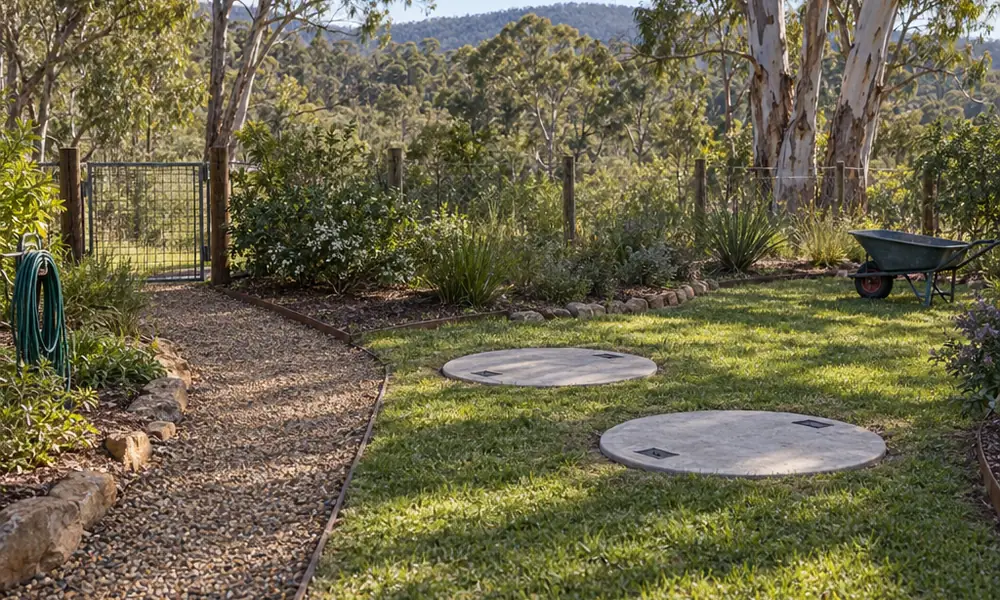
Inspection is part of the normal arrangement in NSW. The Office of Local Government says an owner needs two approvals from council, one to install and one to operate, and after that the council carries out regular inspections to check the system is working properly. Councils can charge fees for inspections.
The responsibility sits with you. In the OLG's words, "it is your responsibility to ensure that the system is approved by your local council and that it is working properly".
Quarterly reporting may mean septic gets more attention in council's numbers. Nobody can say yet whether that means more visits. Our view at Septic Tank Cleaning Central Coast is that a tank you can open, plus records you can hand over, makes any visit short.
Which septic approval do you need right now?
Which septic approval do you need right now?
1. Your approval to operate:
2. Since it was approved, has the system been altered or added to (for example a new tank, a trench moved or extended)?
Typical answer
Renew your approval to operate. The renewal fee is set by Central Coast Council (see its listing on business.gov.au, checked November 2026). Further fees may apply.
Rule (NSW Office of Local Government): every system needs two council approvals, one to install and one to operate, and the owner is responsible for both.
Start with the paperwork, because the paperwork defines what you have agreed to do. A Central Coast application for approval to operate must describe how the system will be "operated, maintained, serviced" and what happens in a breakdown. Your approval is the yardstick your system is measured against, so read what yours says about servicing.
Central Coast Council lists separate 2026-27 fees to apply and to renew, for domestic and commercial systems. See its approval to operate listing on business.gov.au (checked November 2026), which adds that "Further fees may apply".
If you are buying or selling, our earlier piece on the approval questions to ask before you exchange walks through the two approvals in that setting. For the state guidance behind them, see what replaced the Silver Book.
What does a septic tank inspection involve on your side?
Ready for a septic visit: general good practice
What an inspector looks at is council's call. What you control is access and evidence. The list above is general good practice, not a Central Coast checklist.
Lids are where most visits stall. If yours sit under a garden bed or at the bottom of a deep hole, our page on the benefits of installing a septic tank riser covers raising them to the surface. Records come next: a pump-out receipt with a date on it answers questions faster than memory does.
Changed the system since it was approved?
Adding to or altering a system is a separate council approval from the one to operate it. Central Coast's approval to install, construct or alter carries its own 2026-27 fees, set separately for altering a domestic and a commercial system. See its install, construct or alter listing on business.gov.au (checked November 2026). For new work, it will often be granted as part of a Development Application process.
The work itself needs a licensed hand. ABLIS notes that plumbing and drainage work needs a licensed person. A trench extended on a weekend, or a second tank dropped in during a renovation, is the kind of change to raise with council before anyone asks.
Where can you check your approval or report a problem?
Council is the place to confirm what approval is on record for your property. Council says anyone can report an issue that needs regulatory action by phoning 02 4306 7900 or lodging a complaint online, and the same number is council's customer service line for general enquiries.
Watch for the first quarterly compliance report to the Environment and Planning Committee. That is where any onsite sewage activity would show up.
Two jobs before any knock at the gate
Council's part is the approval: find it, check its date, and ring 02 4306 7900 if you can't.
The tank is the other part. If you can't remember when it was last pumped out, or the lids have disappeared under the lawn, contact Septic Tank Cleaning Central Coast through our contact page and book a clean-out. Put the receipt in the folder next to your approval.
Sources
- Regulatory Priorities Statement, Your Voice Our Coast (Central Coast Council)
- Central Coast Environment & Planning Committee, 2 June 2026 minutes summary, MinutesRadar
- Central Coast Ordinary Council Meeting, 27 October 2026 minutes summary, MinutesRadar
- Regulatory priorities 2026-29, Coast Record
- Laws and regulations, NSW Office of Local Government
- Water safety and management, NSW Office of Local Government
- Approval to operate an onsite sewage management system, Central Coast Council, ABLIS
- Approval to install, construct or alter an onsite sewage management system, Central Coast Council, ABLIS